Japan and Mexico’s Festival to Honor Ancestors
By Shinu Singh, co-founder of MiAltar Virtual
Every summer in Japan, something magical happens. Lanterns glow softly in the warm night air, drums echo in the streets, families gather around altars filled with fruit and flowers, and dancers in colorful yukata - summer kimonos - sway in gentle circles under the stars. This is Obon (お盆) — a Buddhist tradition that has been observed for centuries to welcome back the spirits of ancestors.
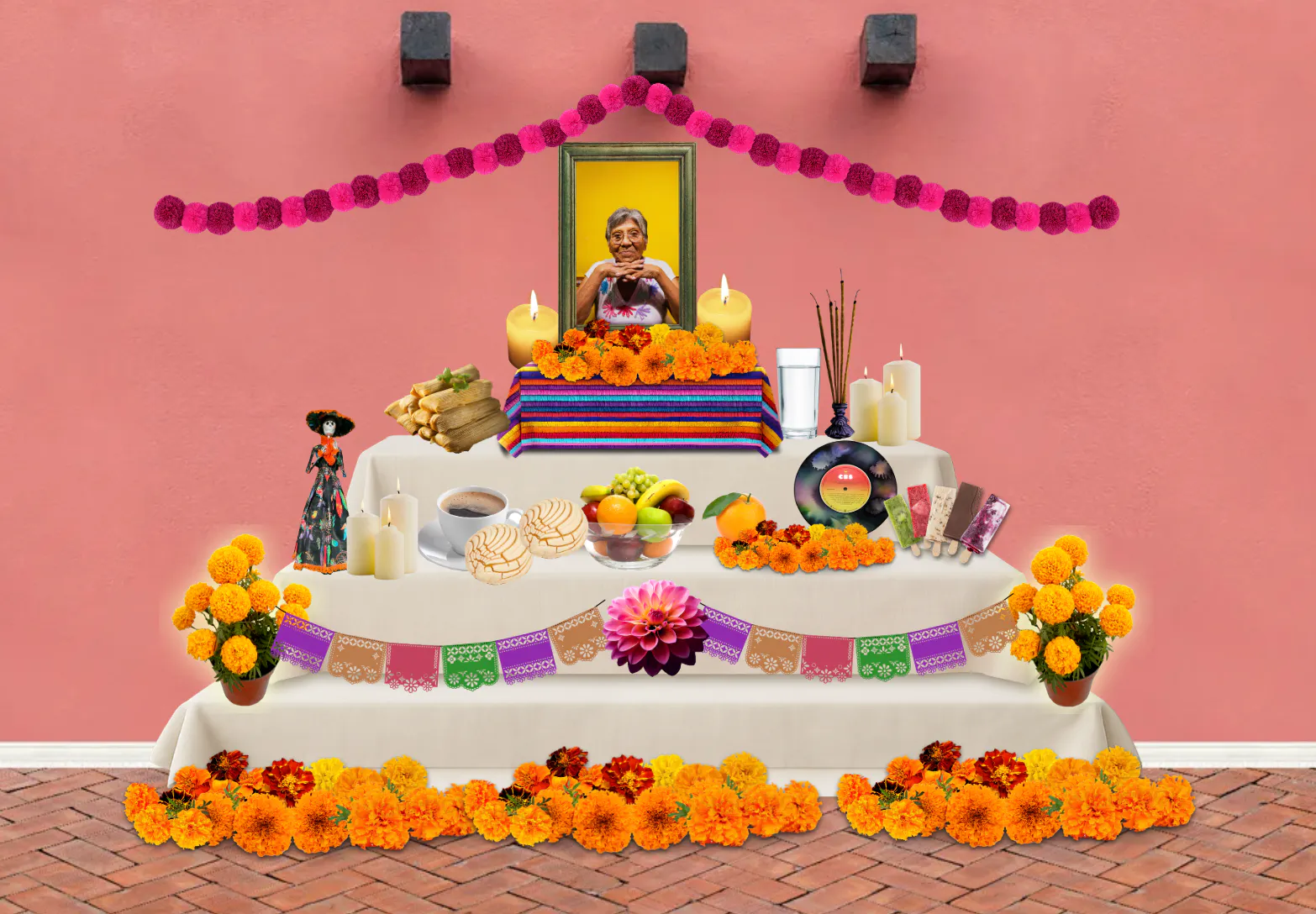
For those of us familiar with Latin American heritage, Obon may feel deeply familiar. Much like Día de los Muertos, it’s a time when the veil between the living and the dead feels thinner, when we set aside days to honor the people who came before us and shaped who we are. But while Día de los Muertos is filled with bright marigolds, sugar skulls, and music-filled cemeteries in early November, Obon happens in summer — and its tone is quieter, more meditative, yet equally filled with love.
A Homecoming for the Spirits
According to tradition, the souls of ancestors return to visit their living relatives during Obon. Families prepare to welcome them home in a very literal way:
- Mukaebi (迎え火): On the first day, small bonfires and lanterns are lit outside homes to guide the spirits back to their traditional homes.
- Altars for the Ancestors: Families set up shōryō-dana (spirit altars) decorated with fruit, flowers, incense, and special offerings. At the very top of the altar is a god figure — not always Buddha, but the local god of that region. For example, in fishing towns where we spoke to elders,, the altar may feature a sea deity rather than a Buddhist image. Offerings are placed respectfully on lower levels, never on the same level as ancestor photos.
- Symbolic Foods: Across Japan, altars may include rice bowls, packaged snacks, and drinks such as nihonshō (Japanese sake) and fresh water (often from a shrine spring, believed to be especially pure). Most iconic are the cucumber horse and eggplant cow, built with chopstick legs. The cucumber - representing a horse - helps ancestors arrive swiftly, while the eggplant - representing a cow - carries them back slowly and peacefully. Red and green leaves are placed as substitutes for lanterns, symbolically lighting their return journey.
- Ohakamairi (お墓参り): Families visit ancestral tombs, which usually honor entire lineages, not just one person. The gravestones often bear the family crest (kamon), flanked by candles (osenkō) or incense, once lit in oil lamps resembling stone lanterns. Flowers — always arranged symmetrically (hana taba) — vary by region. In Kyoto, for example, purple summer blooms are common. Wooden buckets and ladles are used to wash the tomb before offerings are placed. The ritual ends with bows and claps (ni rei ni hakushu): bow twice, clap twice, bow again, then step back respectfully.
This deep attention to ritual — ensuring every ancestor is properly guided, honored, and sent home.
Community Folk Dance
One of Obon’s most joyful traditions is Bon Odori — a community folk dance performed in open squares, temple courtyards, or even streets closed to traffic. The dance steps are simple, designed so everyone can join in regardless of age or skill. Musicians and taiko drummers perform on a central stage as dancers form circles around them, some wearing costumes inspired by Japanese folklore.
In the U.S., Japanese-American communities have kept Bon Odori alive, especially in places like Hawai‘i (where Japanese plantation workers first brought Obon in the late 19th century) and cities like San Jose, California, home to one of the largest Obon festivals in North America.
Here in the Bay Area, I had the opportunity to attend the Obon festivals in Mountain View and San Francisco. In both cities, the highlight was unmistakably Bon Odori — hundreds of dancers in colorful yukata forming circles around the taiko drummers, moving under the glow of paper lanterns. It was a community affair; even first-time visitors were encouraged to join the dance, turning the festival into a shared celebration of life, memory, and community.
The Farewell: Lanterns and Light
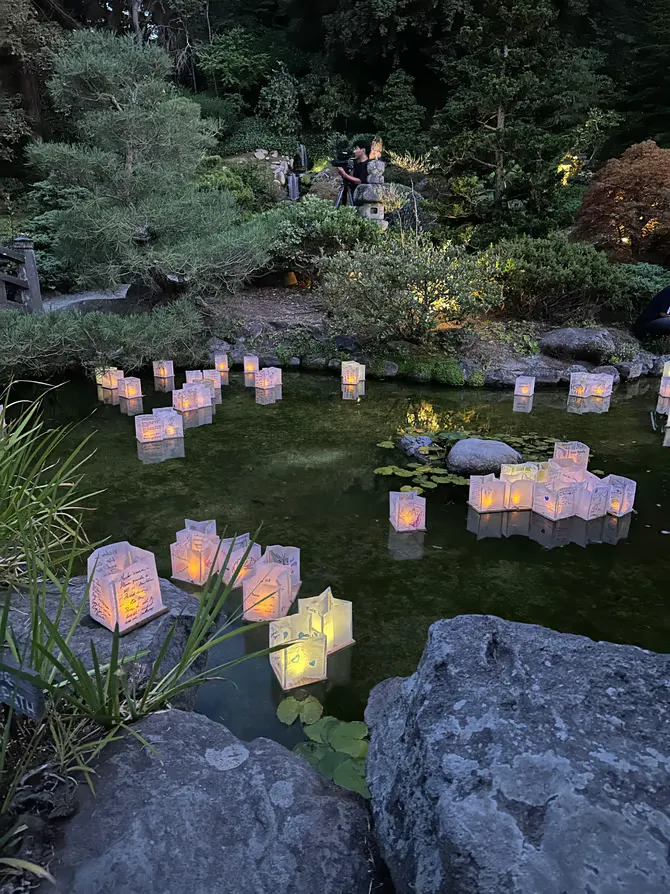
On the final evening of Obon, the atmosphere becomes both beautiful and bittersweet. Okuribi (送り火) bonfires and tōrō nagashi — floating lanterns released on rivers or lakes — bid the spirits farewell, lighting their way back to the spirit world. Each family may release a lantern, while in Kyoto entire mountainsides blaze with giant fire characters (dai, meaning “big”), signaling to all ancestors that it’s time to return to their divine realm.
The glowing lanterns drifting on water are not just visually stunning; they carry a message of peace, gratitude, and safe passage. A moment that symbolizes both grief and gratitude, the same balance many Latinos feel during Día de los Muertos when saying goodbye with candles, prayers, and offerings.
A Cultural Bridge to Día de los Muertos
If you’ve ever celebrated Día de los Muertos, the parallels are interesting:
- Ancestral altars: Obon’s shōryō-dana altars mirrors the ofrendas, complete with food, flowers, candles, and photos.
- Guiding the spirits: Lanterns and bonfires in Obon serve the same purpose as marigold petals and candles in Día de los Muertos — to guide loved ones home.
- Community gathering: Whether it’s Bon Odori or a cemetery vigil, both traditions blend solemnity with celebration.
Where Día de los Muertos is often vibrant and public, Obon tends to be more contemplative. But both share a deep respect for family ties and the cyclical nature of life and death.
Experiencing Obon in the U.S.
Japanese-American communities across the U.S. keep Obon alive, especially in Hawai‘i, where immigrants first introduced it, and along the West Coast. Festivals often include:
- Takoyaki (octopus balls)
- Okonomiyaki (savory cabbage pancakes)
- Yakisoba (fried noodles)
- Taiyaki (fish-shaped cakes)
- Kakigōri (shaved ice)
If you attend, you might find yourself reminded of a summer feria or town festival in Latin America — a place where food, music, and tradition come together.
Why Obon Matters
For Latin individuals living in the U.S., learning about and even participating in Obon can be a beautiful way to connect across cultures. It’s a reminder that honoring our dead is a universal act — whether with marigolds and papel picado, or with lanterns and Bon Odori dances.
In a country as diverse as ours, festivals like Obon create opportunities for shared storytelling, and a deeper understanding that remembrance, memories and healing is not bound by language or borders. It’s an invitation to stand with the light of the lantern and to know — no matter where we come from — that love and memory keep our ancestors close.
---
We invite you to create a digital altar on MiAltar at www.mialtarvirtual.com
-
Also find us @mialtarvirtual on Instagram, Facebook and TikTok.
-
Click here: Quick tutorial on how to build an altar
-
Blog post photo was taken while visiting Hakone Gardens in Saratoga, California for tōrō nagashi.
---
About Shinu Singh
Shinu Singh is the co-founder of MiAltar Virtual, an online platform for honoring our deparated loved ones. When not working on MiAltar, she can be found taking walks along the riverfront and hiking on the coastline.